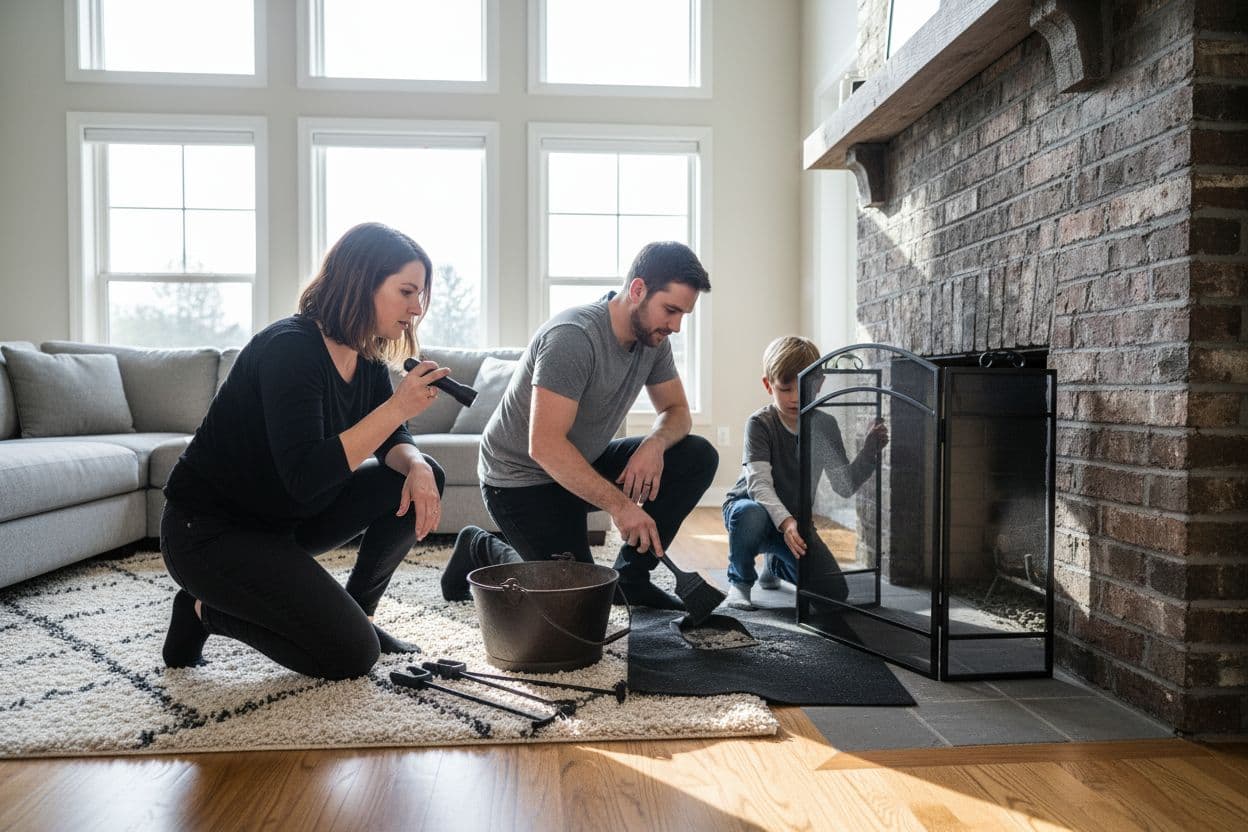
Did you know that over 25,000 chimney fires occur each year in homes that use fireplaces? Many of these incidents could be prevented with the right maintenance and regular safety checks. Fireplaces offer comfort and warmth, but hidden hazards can put your household at risk. Discover practical steps that help you keep your fireplace safe, efficient, and ready for the season, giving you confidence and peace of mind every time you light a fire.
Quick Summary
| Takeaway | Explanation |
|---|---|
| 1. Regularly inspect your fireplace and chimney. | Check for structural damage, creosote buildup, and rusted components to prevent hazards. |
| 2. Safely clear out ash and debris after use. | Wait 24 hours post-fire before removing ash to avoid igniting remaining embers. |
| 3. Schedule annual professional chimney sweeping. | Professional sweepers identify and remove creosote, ensuring safety and efficiency of your fireplace. |
| 4. Maintain a safe perimeter around the fireplace. | Keep a three-foot clearance from flammable materials to reduce fire risks. |
| 5. Test smoke and carbon monoxide detectors monthly. | Functioning detectors are crucial for detecting dangerous gases and ensuring safety. |
Table of Contents
- 1. Inspect the Fireplace and Chimney for Damage
- 2. Clear Out Ash and Old Debris Safely
- 3. Check and Clean the Chimney Flue
- 4. Examine and Maintain the Fireplace Grate
- 5. Test Smoke Alarms and Carbon Monoxide Detectors
- 6. Schedule Regular Professional Chimney Sweeping
- 7. Keep the Area Around the Fireplace Safe and Clear
1. Inspect the Fireplace and Chimney for Damage
Every fireplace tells a story. But sometimes that story includes hidden risks that can compromise your home's safety and comfort. Regular inspection of your fireplace and chimney isn't just a maintenance task it's a critical step in protecting your living space from potential hazards.
A thorough visual inspection helps you catch early signs of wear and structural damage that could lead to serious problems. Look for critical indicators like cracked bricks, deteriorating mortar, rusted components, and creosote buildup. These seemingly small issues can quickly escalate into major safety concerns if left unaddressed.
Start with a comprehensive walkthrough. Examine the fireplace interior for any signs of crumbling masonry or loose bricks. Check the chimney flue for cracks or obstructions that might impede proper ventilation. Pay special attention to the chimney cap and flashing where water damage often begins silently.
For homeowners seeking professional insights, read our guide on comprehensive chimney inspections to understand what trained experts look for during a detailed assessment. Catching potential problems early can save you significant repair costs and prevent dangerous situations.
Key areas to scrutinize during your inspection include:
- Mortar joints between bricks or stones
- Condition of the firebox
- Chimney liner integrity
- Presence of water stains or mold
- Structural alignment of chimney walls
If you discover any concerning signs during your inspection professional intervention becomes crucial. Small repairs now can prevent expensive reconstructions later. Remember: your fireplace is more than a heat source. It's a complex system that requires consistent care and attention.
2. Clear Out Ash and Old Debris Safely
Ash buildup might seem harmless but it can become a silent threat to your fireplace's efficiency and your home's safety. Regularly clearing out old ash and debris is more than a cleaning chore it's a critical maintenance practice that protects your fireplace and living space.
Understanding the right way to remove ash is crucial. Warm ash contains hot embers that can reignite hours or even days after your fire has seemingly died out. This means your cleaning approach requires careful strategy and patience. Never rush the ash removal process or assume all remnants are completely cool.
Wait at least 24 hours after your last fire before attempting to clear out ash. Use a metal ash bucket with a tight fitting lid specifically designed for this purpose. Wear protective gloves and a dust mask to prevent respiratory irritation from fine ash particles. Gently scoop the ash using a metal ash shovel designed to minimize dust kickup.
Leave a thin layer of ash approximately one inch thick at the bottom of your fireplace. This layer actually helps protect the floor of your firebox and can improve fire starting in future burns. Check our detailed guide on fireplace maintenance techniques for more professional insights.
Critical safety tips for ash removal include:
- Always use metal containers with secure lids
- Store ash containers outside away from wooden structures
- Never dispose of ash in paper or plastic containers
- Keep ash containers on a non flammable surface
- Ensure complete cooling before final disposal
Proper ash management goes beyond simple cleaning. It's about creating a safer environment for you and your family while maintaining your fireplace's long term performance and structural integrity.
3. Check and Clean the Chimney Flue
Your chimney flue is the unsung hero of your fireplace system. Often overlooked and rarely seen it plays a critical role in safely venting smoke combustion gases and preventing dangerous buildup of harmful materials.
Creosote accumulation represents the most significant threat to your chimney's functionality. This tar like substance builds up from wood burning and can quickly transform from a minor inconvenience into a serious fire hazard. When creosote layers become thick they become highly combustible increasing the risk of a dangerous chimney fire that could potentially spread through your entire home.
Professional chimney sweeping is the most reliable method for thorough flue maintenance. Our comprehensive chimney sweeping services can identify and remove these hidden risks before they become dangerous. Visual inspection alone is not enough chimney professionals use specialized cameras and tools to examine areas invisible to the naked eye.
The cleaning process involves more than just removing visible soot. A professional chimney sweep will meticulously:
- Remove creosote deposits
- Check for structural damage
- Evaluate the flue liner condition
- Ensure proper ventilation
- Identify potential blockages
Some homeowners attempt DIY flue cleaning but this approach can be risky. Professional sweeps have the right equipment and expertise to perform a deep clean without damaging your chimney's delicate internal structure. They can spot early warning signs of potential issues that might go unnoticed during a casual home inspection.
Frequency matters. Most experts recommend a professional chimney flue cleaning at least once per year particularly if you use your fireplace regularly. Homes with wood burning stoves or those burning wood frequently might require more frequent maintenance to ensure optimal safety and performance.
4. Examine and Maintain the Fireplace Grate
The fireplace grate is more than a decorative accessory. It serves as a critical component that supports burning wood and ensures proper airflow during your fire. A well maintained grate can significantly improve your fireplace's performance and safety.
Metal fatigue and corrosion are the primary enemies of your fireplace grate. Constant exposure to high temperatures and burning materials gradually weakens the metal structure. Regular examination helps you catch potential issues before they compromise your grate's integrity or create safety risks.
Start by performing a visual and tactile inspection. Look for signs of warping bending or significant rust. Run your hand along the grate's bars checking for uneven surfaces or weak spots. Pay special attention to the connection points where bars meet the frame these areas are most susceptible to structural stress.
Our professional fireplace maintenance guide provides additional insights into grate care and replacement strategies. Depending on your grate's material cast iron and steel grates require different maintenance approaches.
Key maintenance steps include:
- Clean the grate after each use
- Remove ash and debris thoroughly
- Check for structural integrity
- Rotate the grate periodically to ensure even wear
- Apply high temperature resistant paint if rust appears
Consider replacing your grate if you notice significant structural damage. A compromised grate can cause logs to roll out of the fireplace or create uneven burning patterns. Modern grates are designed with improved airflow features that can enhance your fire's efficiency and reduce wood consumption.
Proper grate maintenance is not just about preserving equipment. It's about creating a safer more enjoyable fireplace experience for you and your family. A well cared for grate ensures better fire performance and reduces potential safety hazards.
5. Test Smoke Alarms and Carbon Monoxide Detectors
Your fireplace is a source of warmth and comfort but it can also be a potential source of dangerous gases and fire risks. Smoke alarms and carbon monoxide detectors are your first line of defense against these silent threats.
Invisible dangers require vigilant monitoring. Carbon monoxide is a colorless odorless gas that can be produced during incomplete wood burning. Without proper detection systems you and your family could be exposed to life threatening conditions without any warning. Regular testing of these safety devices is not optional it is critical.
Most safety experts recommend testing your detectors monthly. Press the test button on each device and listen for the alarm sound. Replace batteries at least once per year or immediately if the low battery warning chirps. Modern detectors typically have a lifespan of 5 to 7 years after which they should be completely replaced.
Learn more about comprehensive home safety practices to ensure your family remains protected during fireplace use. Strategic placement of detectors is as important as their maintenance.
Key detector placement and testing strategies include:
- Install carbon monoxide detectors near sleeping areas
- Place smoke alarms on every home level
- Test alarms monthly
- Replace batteries annually
- Keep detectors away from direct drafts
- Ensure detectors are interconnected for full home coverage
Do not rely solely on battery powered devices. Consider hardwired detectors with battery backup for consistent protection. Some modern smart detectors can send alerts directly to your smartphone providing an additional layer of safety monitoring.
Remember that detector maintenance is a small investment compared to the potential cost of undetected fire or gas leak. Your proactive approach could quite literally save lives.
6. Schedule Regular Professional Chimney Sweeping
Your chimney might look clean from the outside but hidden dangers can lurk within its complex interior. Professional chimney sweeping is not a luxury it is a critical maintenance practice that protects your home and family from potential fire risks.
Creosote buildup represents the most significant threat to your chimney's safety. This sticky black substance accumulates from wood burning and can quickly transform from a minor inconvenience into a serious fire hazard. Professional sweeps use specialized equipment to remove these dangerous deposits that home cleaning cannot effectively address.
Most experts recommend annual chimney sweeping for regular fireplace users. Homes with wood burning stoves or those using the fireplace multiple times per week might require even more frequent professional maintenance. A comprehensive sweep involves more than just removing soot it includes a detailed inspection of your chimney's structural integrity.
Book our expert chimney sweeping service directly through WhatsApp for a convenient and thorough maintenance experience. Professional sweeps can identify potential issues before they become expensive repairs.
Key benefits of professional chimney sweeping include:
- Comprehensive creosote removal
- Structural damage detection
- Improved fireplace efficiency
- Reduced risk of chimney fires
- Extended chimney lifespan
Do not underestimate the complexity of chimney maintenance. Modern chimneys involve intricate systems including liners flashing and complex ventilation mechanisms. A professional sweep brings expertise that goes beyond simple cleaning. They can detect early signs of structural weakness moisture damage and potential blockages that could compromise your fireplace's performance.
Think of professional chimney sweeping as an investment in your home's safety and your family's comfort. A small annual expense can prevent potentially catastrophic fire risks and ensure your fireplace remains a source of warmth and joy.
7. Keep the Area Around the Fireplace Safe and Clear
Your fireplace area is more than just a decorative space. It's a potential safety zone that requires careful attention and strategic organization. A cluttered or improperly maintained fireplace perimeter can quickly transform from a cozy gathering spot to a dangerous fire hazard.
Combustible materials represent the most significant risk to fireplace safety. Furniture curtains rugs and decorative items can ignite unexpectedly if placed too close to active flames or hot surfaces. Maintaining a clear safety perimeter is not about aesthetics it is about protecting your home and family from potential fire risks.
Professional safety guidelines recommend maintaining a minimum clearance of three feet around your fireplace. This buffer zone helps prevent accidental ignition and provides a safe space for managing fire related activities. Consider using fireproof materials like stone or ceramic tiles in the immediate fireplace surroundings to add an extra layer of protection.
Explore our comprehensive home fire safety recommendations for more detailed insights into creating a secure fireplace environment. Strategic planning can significantly reduce potential risks.
Key safety strategies for fireplace area management include:
- Remove flammable decorations
- Use fireproof hearth rugs
- Install protective screens
- Keep furniture at safe distances
- Store firewood away from direct heat
- Use metal containers for ash disposal
Children and pets require special consideration. Install sturdy fireplace gates or screens to prevent direct contact with hot surfaces. Teach family members about safe fireplace zones and establish clear boundaries. Remember that supervision is key when children or animals are near an active fireplace.
Think of your fireplace area as a dynamic safety environment. Regular assessment and proactive management can transform this space from a potential risk zone into a secure and enjoyable part of your home.
Below is a comprehensive table summarizing the main safety and maintenance practices for fireplaces discussed throughout the article.
| Main Step | Key Points & Actions | Benefits/Outcomes |
|---|---|---|
| Inspect the Fireplace and Chimney | Look for cracked bricks, deteriorating mortar, rust, and creosote buildup. | Catch early signs of damage to prevent major safety concerns. |
| Clear Out Ash and Old Debris Safely | Use metal containers, wait 24 hours before clearing, and wear protective gear. | Increases efficiency and safety of the fireplace. |
| Check and Clean the Chimney Flue | Remove creosote deposits and assess structure with professional help. | Reduces risk of chimney fires and ensures safe ventilation. |
| Examine and Maintain the Fireplace Grate | Check for signs of metal fatigue and corrosion. Clean and rotate regularly. | Maintains grate integrity and improves fire performance. |
| Test Smoke Alarms and Carbon Monoxide Detectors | Test monthly and replace batteries annually. Ensure strategic placement. | Provides early detection of fire and gas threats. |
| Schedule Professional Chimney Sweeping | Annual cleaning to remove creosote and inspect structural integrity. | Protects against fire hazards and prolongs chimney lifespan. |
| Keep the Area Around the Fireplace Safe and Clear | Maintain a 3-foot clearance, use fireproof materials, and remove flammable items. | Enhances overall home safety and prevents potential fires. |
Protect Your Home With Expert Fireplace Care in Dublin
After reading about the hidden dangers in your fireplace system, you might be wondering how to ensure real safety and lasting efficiency for your home. Concerns like creosote buildup, chimney damage, or unreliable smoke detectors are more than just inconvenient. They risk your family's well-being. Ignoring these small warning signs can quickly turn a cozy night by the fire into a costly or dangerous situation. You deserve peace of mind knowing that every part of your fireplace and chimney has been checked and cared for by professionals who prioritize your security.
Do not wait for a problem to show itself before you take action. Book your comprehensive inspection and cleaning with Chimney Sweeper Dublin today and experience quick, direct support through WhatsApp. With our insured, meticulous approach and camera inspections, you get more than a standard service. You get a guarantee of thorough work and expert advice, tailored to all the fireplace care steps you have just learned. See how our fireplace maintenance guide and fast appointment system can help you keep your home safe, warm, and worry-free. Visit https://chimneysweeper.ie now to schedule your professional visit and make your fireplace a source of comfort this season.
Frequently Asked Questions
How often should I inspect my fireplace and chimney for damage?
Regularly inspect your fireplace and chimney at least once a year. Schedule this inspection before the heating season begins to catch any early signs of wear or damage that could lead to safety hazards.
What is the proper way to clear out ash from my fireplace?
Wait at least 24 hours after your last fire to ensure all embers are completely cool. Use a metal ash bucket with a tight-fitting lid and dispose of the ash on a non-flammable surface, ensuring you leave a thin layer in the firebox to improve future burning.
How can I tell if my chimney flue needs cleaning or maintenance?
If you notice excessive creosote buildup or experience poor ventilation, it's time to have your chimney flue cleaned. Generally, schedule a professional cleaning at least once a year for regular fireplace users to prevent fire hazards.
What should I look for when examining my fireplace grate?
Inspect your fireplace grate for signs of warping, bending, or significant rust. Regularly check these areas and clean your grate after each use to maintain its integrity and improve airflow efficiently.
How can I ensure my smoke alarms and carbon monoxide detectors are effective?
Test your smoke alarms and carbon monoxide detectors monthly by pressing the test button and listening for an alarm sound. Replace batteries at least once a year to maintain reliability, and consider replacing devices every 5 to 7 years for optimal safety.
What safety precautions should I take around my fireplace area?
Maintain a minimum clearance of three feet around your fireplace, ensuring no flammable materials are nearby. Create a safe perimeter by using fireproof materials and installing protective screens or gates to keep children and pets away from hot surfaces.